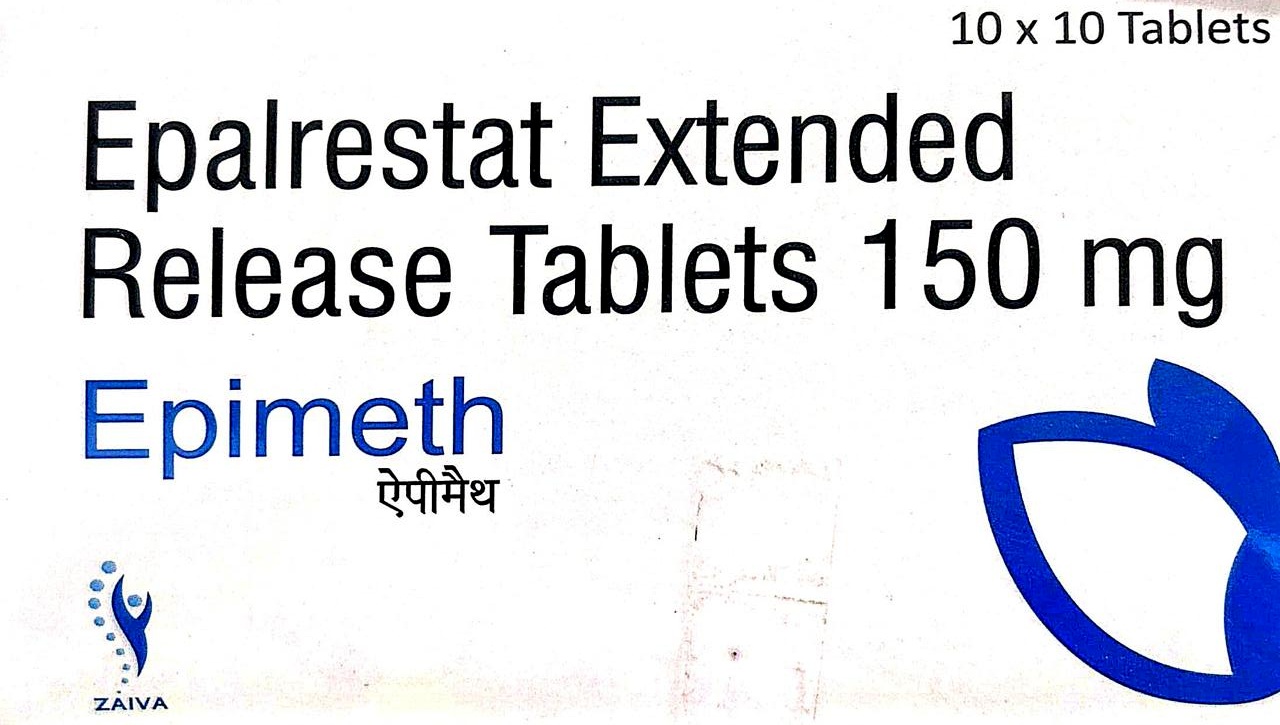
Diabetic peripheral neuropathy where epalrestat is clinically appropriate.
Inhibits aldose reductase in the polyol pathway.
Mechanistic rationale is reduction of sorbitol accumulation associated with chronic hyperglycaemia.
Evidence and regulatory status vary internationally; local approved information should guide use.
Composition & dosage
Composition: Epalrestat · 150 mg
Dosage form: Tablet
Dosage: As prescribed by the doctor.
How it works
Aldose reductase inhibition reduces conversion of glucose to sorbitol in the polyol pathway; intended to reduce hyperglycemia-related metabolic nerve injury.
Aldose reductase inhibition reduces conversion of glucose to sorbitol in the polyol pathway
intended to reduce hyperglycemia-related metabolic nerve injury.
Epalrestat targets the polyol pathway through aldose-reductase inhibition. Long-term comparative evidence supports effects on diabetic neuropathy measures in selected patients.
Safety information
Monitor adverse effects and laboratory parameters according to local prescribing information.
Do not substitute this portal for local approved labeling.
Diabetes control and comprehensive neuropathy management remain essential.
Review the current approved prescribing information, contraindications, interactions, organ-function considerations, pregnancy/lactation advice and patient-specific risks before prescribing.
Evidence context
Epalrestat targets the polyol pathway through aldose-reductase inhibition. Long-term comparative evidence supports effects on diabetic neuropathy measures in selected patients.
Evidence is strongest in diabetic neuropathy populations studied in Asia/Japan and should not be generalized to all neuropathic pain.