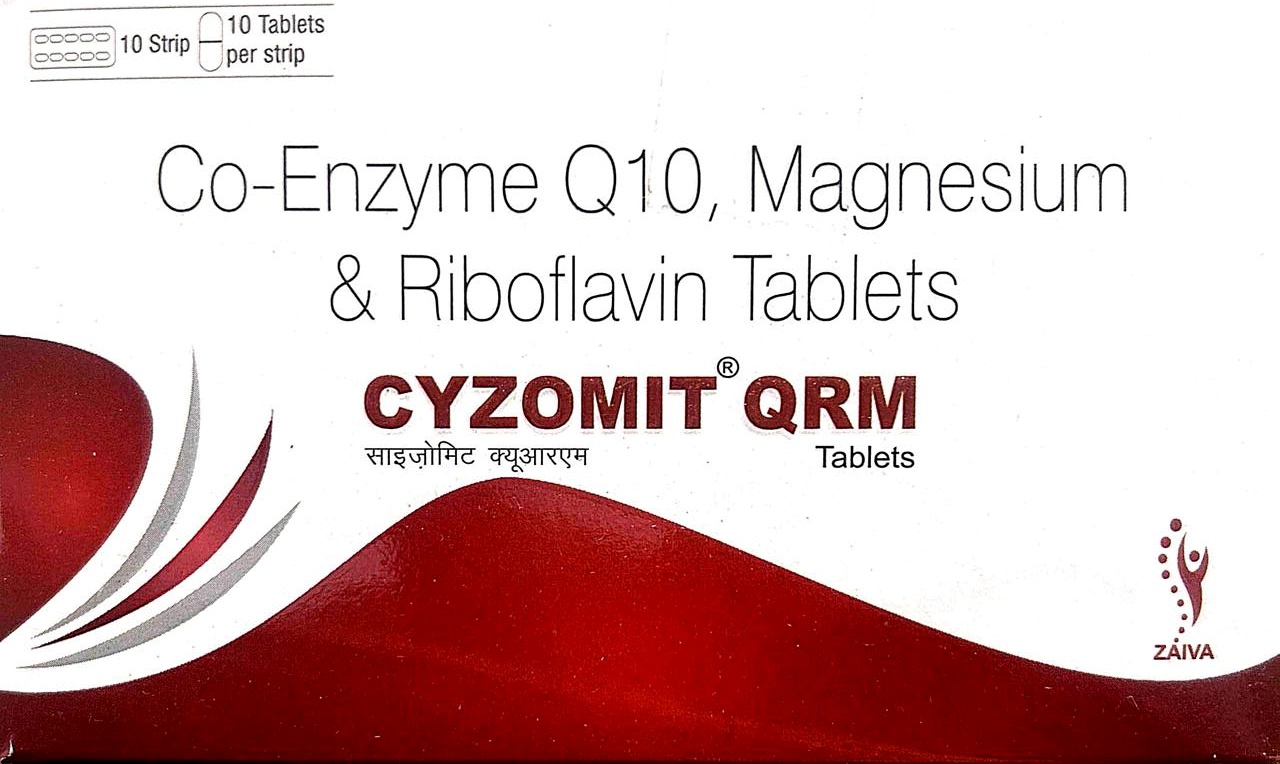
CoQ10 participates in mitochondrial electron transport; riboflavin provides FAD/FMN cofactors for cellular energy metabolism; magnesium is required for ATP utilization and neuronal physiology.
CoQ10 participates in mitochondrial electron transport and supports ATP generation.
Riboflavin is converted to FAD and FMN, essential cofactors in redox and energy metabolism.
Magnesium participates in ATP-dependent enzymatic reactions, ion-channel function and neuronal physiology.
The ingredients have established physiological roles in mitochondrial electron transport, flavin-dependent redox reactions and magnesium-dependent cellular function.
Safety information
Review renal function and total magnesium exposure.
Consider gastrointestinal intolerance and interactions that affect mineral absorption.
Use the current approved product information for patient-specific counselling.
Review the current approved prescribing information, contraindications, interactions, organ-function considerations, pregnancy/lactation advice and patient-specific risks before prescribing.
Evidence context
The ingredients have established physiological roles in mitochondrial electron transport, flavin-dependent redox reactions and magnesium-dependent cellular function.
Ingredient physiology does not establish superiority or a guaranteed clinical outcome for the fixed formulation.